In longevity medicine, it is easy to become distracted by newer tools. Blood tests. Wearables. Supplements. Genetic testing. Advanced imaging. Continuous glucose monitors. All of these can be useful in the right context. But none of them replace the fundamentals.
And when we look at the evidence, exercise still sits at the centre of any serious longevity plan. Not because it is fashionable. Not because it is simple. Not because it is easy to sell. Because the effect on health is substantial.
Exercise improves cardiovascular fitness, muscle strength, glucose handling, body composition, bone health, cognition, mood, pain tolerance, physical confidence and independence. There is no blood test, supplement or wearable that comes close to doing all of that.
Exercise is not just "lifestyle advice"
One of the problems in medicine is that exercise is often described too vaguely. "Try to exercise more." "Lose some weight." "Go for a walk." "Keep active." That advice is well-meaning, but it is usually not enough.
Exercise should be prescribed with the same seriousness as medication. What type? How often? How hard? How long? What is the progression? What is the limiting factor? What happens if pain flares? How will we measure improvement?
A proper exercise plan should be specific, realistic, progressive and adjusted to the person in front of us. That is especially important in midlife and later life, where people often have injuries, arthritis, tendon pain, back pain, low confidence, poor sleep, work stress or long periods of deconditioning.
The answer is not always "just train harder". The answer is to prescribe the right exercise, at the right dose, with the right progression.
VO₂ max matters because it reflects aerobic reserve
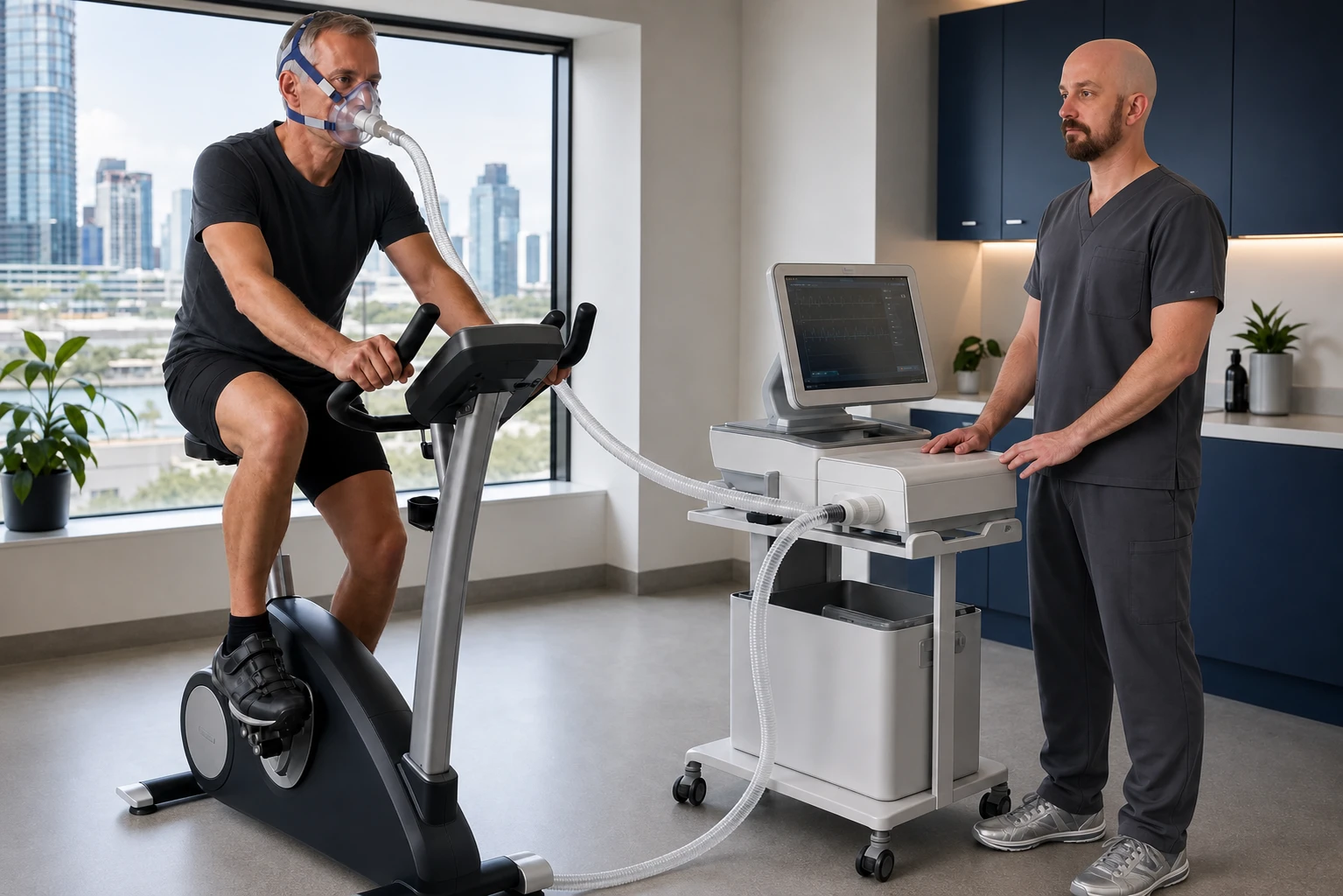
VO₂ max is the maximum amount of oxygen the body can take in, transport and use during hard exercise. It is often discussed as an athlete metric, but clinically it is much more than that. VO₂ max is a marker of aerobic reserve.
That reserve matters for ordinary life. Walking up hills. Climbing stairs. Carrying bags. Travelling. Recovering from illness. Tolerating surgery. Remaining independent.
When aerobic reserve is high, daily tasks sit well below a person's ceiling. When aerobic reserve is low, ordinary activities begin to approach that ceiling. Stairs become difficult. Hills are avoided. Walking pace slows. Recovery takes longer. The person's world gradually becomes smaller.
That is why VO₂ max is relevant in preventive medicine. It gives us information about physical capacity that blood tests cannot provide.
Cardiovascular fitness is strongly linked with mortality risk
Cardiorespiratory fitness is one of the strongest markers we have for long-term health. Large cohort studies using exercise treadmill testing have shown a clear association between higher cardiorespiratory fitness and lower all-cause mortality.
This does not mean exercise makes anyone immune to disease. It means that fitness is a powerful marker of physiological reserve. A person with better cardiorespiratory fitness generally has a larger buffer against cardiovascular disease, metabolic disease, functional decline and the physiological stress of ageing.
From a practical clinical point of view, this matters. A mildly abnormal blood test may or may not change a person's risk substantially. But very low fitness almost always matters. It changes how someone moves, how they cope with illness, how they tolerate stress, and how long they can maintain independence.
Strength is just as important
Cardiovascular fitness is only one side of the equation. Strength matters just as much. Muscle is not only for appearance or athletic performance. It is a major determinant of function.
A person needs strength to rise from a chair, climb stairs, carry groceries, lift a suitcase, get off the floor and recover from a stumble. Strength also helps protect joints, supports bone health, improves glucose handling and reduces frailty risk.
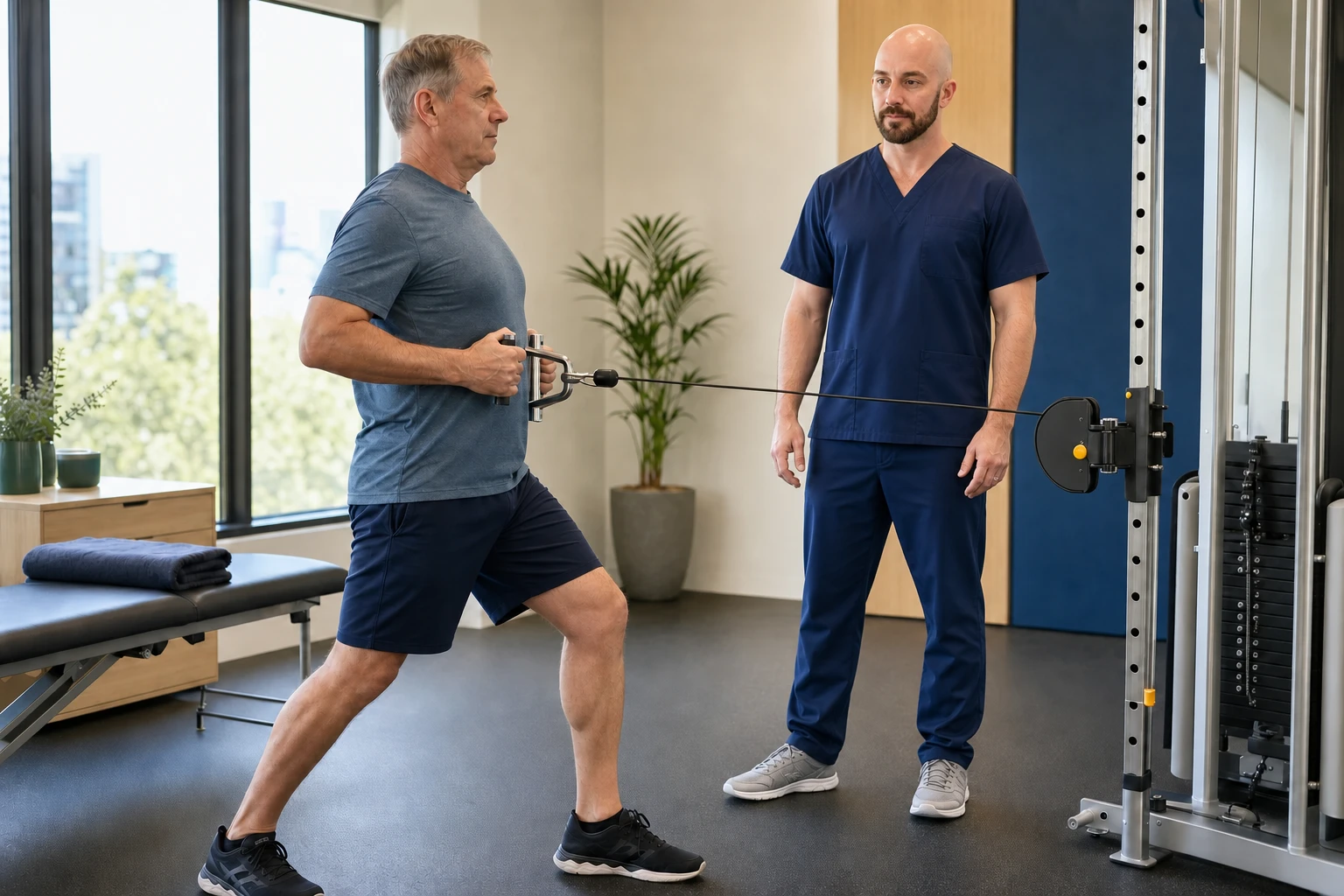
Importantly, low muscle strength appears to predict poor outcomes more strongly than muscle mass alone. That makes sense clinically. Function is not only about how much muscle someone has, but what that muscle can do. From a longevity perspective, resistance training is not optional. It is one of the main ways we preserve independence.
Independence has to be trained before it is needed
Most people do not lose independence overnight. It usually happens gradually. A person stops doing hills. Then they stop doing stairs. Then they avoid carrying heavier objects. Then they stop getting down to the floor. Then they become less confident walking on uneven ground. Then a minor illness causes a major decline.
By the time independence is clearly threatened, the process has often been developing for years. This is why exercise needs to start before there is obvious frailty.
The goal is not to turn everyone into an athlete. The goal is to preserve enough physical reserve that normal life remains manageable: enough aerobic fitness to move through the world, enough strength to manage daily tasks, enough balance to reduce falls risk, and enough confidence to keep participating in life.
Exercise and the brain
Exercise is also one of the most important interventions for brain health. Regular physical activity is associated with better cognitive function and a lower risk of cognitive decline.
The biology makes sense. Exercise improves vascular health, insulin sensitivity, inflammation, sleep quality and mood. It also stimulates neurotrophic and protective factors involved in neuronal health, including brain-derived neurotrophic factor, insulin-like growth factor 1 and other pathways relevant to brain ageing.
This does not mean exercise is a guaranteed prevention strategy for dementia. Nothing is. But if we are serious about reducing neurodegenerative risk, exercise has to be part of the plan. A wearable can count steps. A blood test can show glucose or lipids. A supplement may help correct a deficiency. But exercise changes the physiology.
Pain and injury need to be managed, not ignored
As an MSK GP, this is where I think many exercise conversations fail. People are often told to exercise without proper attention to pain, injury or physical limitations. That does not work.
Back pain, knee osteoarthritis, hip pain, shoulder pain, tendon problems, previous surgery, fear of movement and low confidence all change what exercise should look like. The answer is not to ignore pain and push through everything. It is also not to avoid exercise indefinitely. The answer is pain and injury gating.
That means identifying what is limiting the person, modifying the program, treating the relevant condition where possible, and building a pathway back to movement. For one person, that might mean starting with walking and basic strength work. For another, it might mean physiotherapy, imaging, injection therapy, exercise physiology or a modified gym program. For someone else, it might mean beginning with water-based exercise, cycling, Pilates-style strengthening or short intervals of low-impact cardio. The principle is the same: make exercise possible, safe and progressive.
Exercise prescription should be measured
A serious longevity program should measure physical capacity. That does not mean everyone needs laboratory VO₂ max testing immediately. But it does mean we should assess the things that matter. Depending on the person, useful measures may include:
- VO₂ max or estimated cardiorespiratory fitness
- resting blood pressure and exercise blood pressure response
- grip strength
- sit-to-stand performance
- gait speed
- balance
- DEXA body composition
- appendicular lean mass index
- visceral adipose tissue
- training history
- pain and injury barriers
- weekly exercise volume
Blood tests tell us about risk. Functional measures tell us about capacity. Both are useful. They answer different questions.
Supplements and wearables have a place
This is not an argument against supplements, testing or technology. There are situations where supplementation is appropriate. Vitamin D, iron, B12, omega-3, creatine and other interventions may be useful when clinically indicated.
Wearables can also help. They can show activity levels, sleep patterns, heart rate trends, training load and recovery data. Blood tests remain essential for identifying cardiovascular, metabolic, endocrine, nutritional and inflammatory problems.
But these tools should support the exercise plan, not replace it. A person does not become fit because their watch measures steps. They do not become strong because their blood tests are normal. They do not build aerobic reserve because they take a supplement. The body adapts when it is progressively challenged.
What a serious longevity exercise plan includes
A good longevity exercise plan usually needs several components.
First, aerobic training. This includes regular low-to-moderate intensity exercise that can be sustained consistently: brisk walking, cycling, swimming, rowing, hiking or similar.
Second, higher-intensity cardiovascular work where appropriate. This can help improve VO₂ max, but it needs to be introduced carefully, particularly in people with cardiovascular risk, symptoms, pain or long periods of inactivity.
Third, progressive resistance training. This is essential for muscle strength, bone health, glucose handling and long-term function.
Fourth, mobility and balance work where needed. This matters particularly for people with falls risk, stiffness, pain, poor confidence or previous injury.
Fifth, pain and injury management. Exercise has to be sustainable. If pain is the limiting factor, it needs assessment and a plan.
Finally, reassessment. A plan should change as the person adapts.
The clinical point
Longevity medicine can become too focused on measurement. Measurement is useful. I use it. But measurement is not the same as intervention.
A blood test can identify risk. A DEXA scan can show body composition. A VO₂ max test can show aerobic reserve. A wearable can show activity patterns. But the intervention is still the work. Moving the body. Building aerobic capacity. Building strength. Maintaining muscle. Managing pain. Improving consistency. Protecting independence.
Exercise is still the most powerful longevity medicine we have. If your longevity plan does not include exercise prescription, it is not serious.
Evidence note: This post summarises evidence from cardiorespiratory fitness studies, resistance training and muscle strength research, exercise physiology, cognitive health research and clinical musculoskeletal practice. It is general information, not individual medical advice.