In preventive medicine, we spend a lot of time looking at blood tests. That is appropriate. Blood tests can tell us a great deal about cardiovascular risk, metabolic health, inflammation, nutritional status, kidney function, liver function, thyroid function and many other areas.
But blood tests do not tell us everything. They do not tell us whether someone can climb stairs comfortably. They do not tell us whether someone has enough physical reserve to recover from illness. They do not tell us whether someone is likely to remain independent in later life. They do not tell us how much aerobic capacity a person has available for daily living.
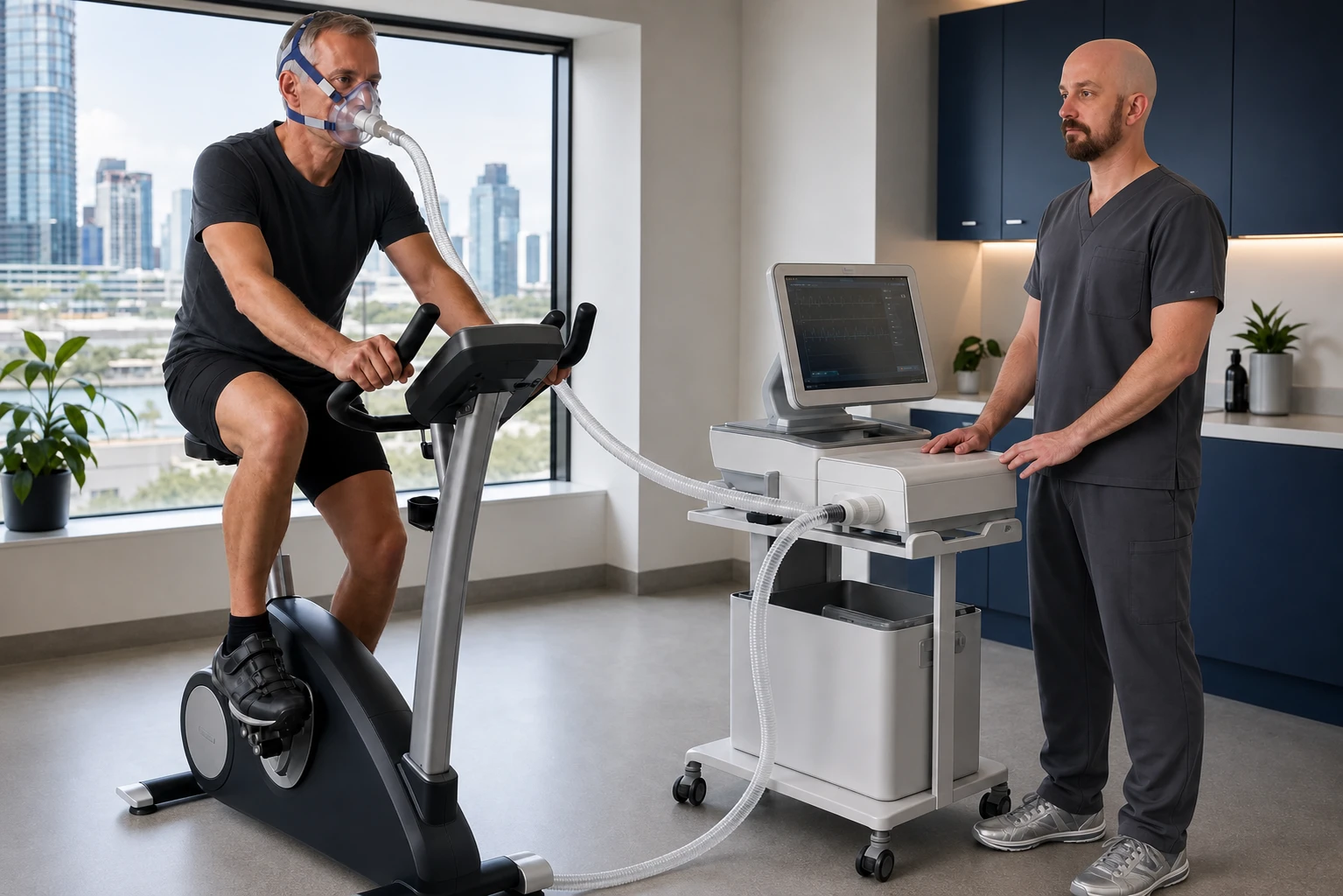
That is where VO₂ max becomes clinically useful. VO₂ max is the maximum amount of oxygen the body can take in, transport and use during hard exercise. It is usually discussed in athletes, but it should not be thought of only as a sports performance number. From a longevity and general practice perspective, VO₂ max is a practical marker of physical capacity.
VO₂ max is about reserve
Most people do not need a high VO₂ max because they want to race. They need it because life requires physical reserve.
Walking up a hill requires reserve. Climbing stairs requires reserve. Carrying groceries requires reserve. Recovering from pneumonia, surgery or a period of bed rest requires reserve.
When someone has a high aerobic reserve, normal daily activities sit well below their ceiling. They have capacity left over. When someone has a low aerobic reserve, ordinary tasks start to approach their ceiling. Stairs become difficult. Hills become avoided. Walking pace slows. Recovery takes longer. The world gradually becomes smaller.
That is why VO₂ max matters. It is not just a measure of fitness. It is a measure of margin.
VO₂ max declines with age
VO₂ max tends to decline with age, often by around 8–10% per decade, and in many people the decline becomes more obvious after midlife. This is partly due to changes in maximal heart rate, cardiac output, blood volume, muscle mass, mitochondrial function and physical activity levels.
But the important point is that the decline is not fixed. Some decline is biological. A lot of it is behavioural. People move less. They stop doing vigorous activity. They lose muscle. They avoid hills and stairs. They reduce their physical demands because things feel harder.
The body adapts to what we ask of it. If we stop asking the cardiovascular system to work, its capacity falls.
Stair climbing is a useful way to think about it
VO₂ max can feel abstract, but stair climbing makes it more concrete. A person in midlife with a reasonable VO₂ max can usually climb a flight of stairs briskly without thinking much about it.
Later in life, the oxygen demand of that same task has not changed very much. But the person's capacity may have. If VO₂ max has fallen substantially, the same stairs now represent a much higher proportion of their total available capacity. What was once easy becomes breathless. What was once automatic becomes something to avoid.
This is one of the reasons physical decline can feel sudden, even though the process has usually been building for years. The task did not become dramatically harder. The person's reserve became smaller.
Independence has a physiology
Independence is often discussed socially or practically: living at home, driving, shopping, cooking, travelling, gardening, seeing friends. But underneath those activities is physiology.
To live independently, a person needs enough aerobic capacity to move through the world. They need enough strength to rise from a chair, climb stairs and carry objects. They need enough balance and power to recover from small losses of footing. They need enough bone and muscle to reduce the consequences of falls. They need enough cardiovascular reserve to tolerate illness and stress.
VO₂ max is not the only measure that matters, but it is one of the most useful markers of this broader physical reserve. Once VO₂ max falls below a certain level, independence becomes more fragile. That is why it should be taken seriously before there is a problem.
A normal blood test does not mean normal function
One of the common issues in preventive medicine is that a person can have reasonably normal blood results but still be physically underprepared for ageing. Their cholesterol might be acceptable. Their glucose might be acceptable. Their kidney and liver function might be acceptable. But they may still be losing aerobic capacity, strength and confidence in movement.
That matters. A person can look "medically fine" on paper while quietly losing the physical reserve that protects their future independence.
This is not an argument against blood tests. They remain important. It is an argument for adding functional measures to the assessment. VO₂ max, grip strength, gait speed, balance, sit-to-stand capacity, DEXA body composition and exercise tolerance can tell us things that blood tests cannot.
VO₂ max is trainable
The good news is that VO₂ max is highly trainable. It can improve at almost any age with the right exercise program, provided the plan is safe and appropriate for the person.
For most people, the foundation is regular aerobic exercise. That might include brisk walking, cycling, swimming, rowing, jogging, hiking, stair climbing or structured cardio training. Many people also benefit from some higher-intensity work, once they are ready for it. This does not mean reckless training. It means carefully prescribed efforts that challenge the cardiovascular system enough to stimulate adaptation.
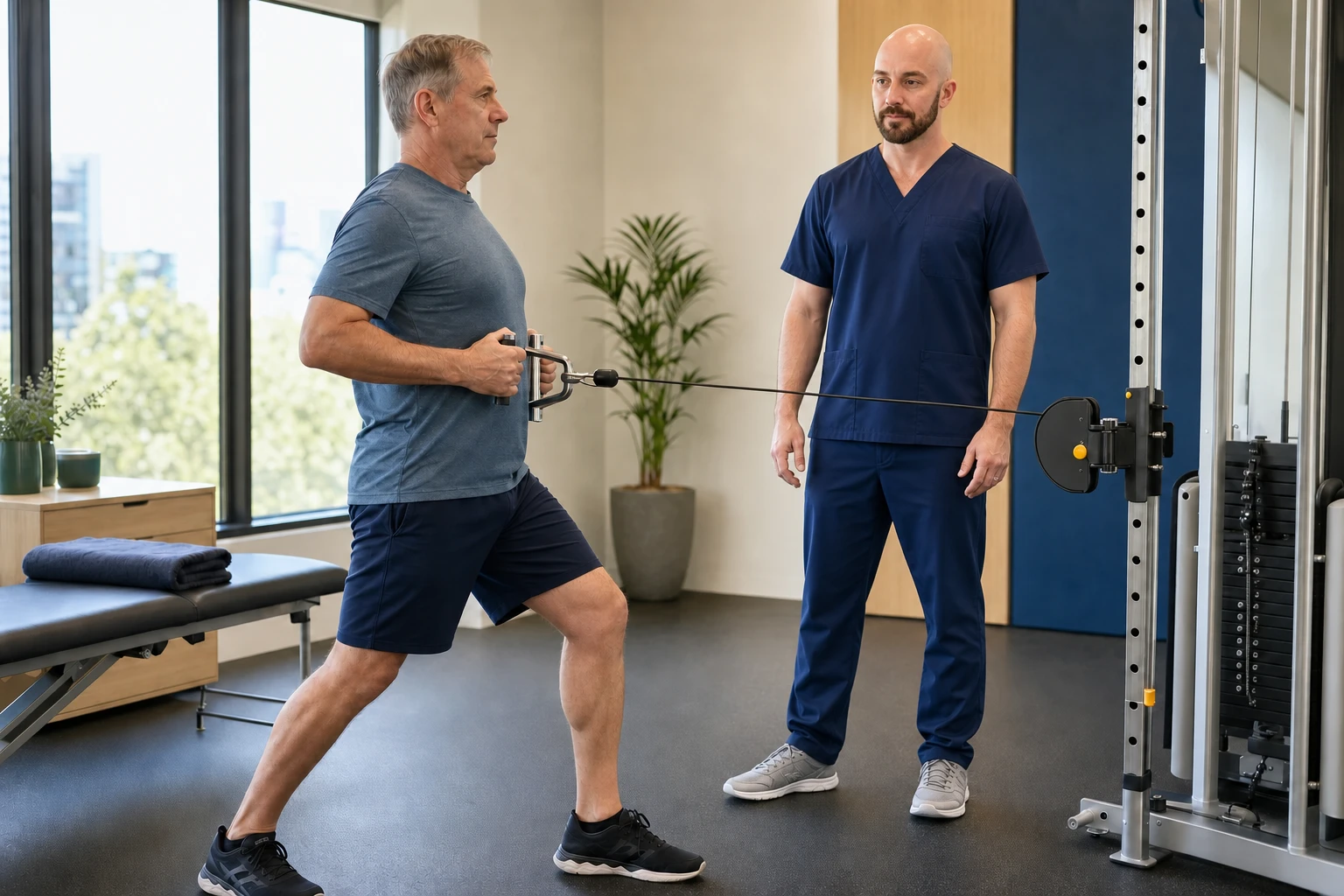
For some patients, especially those with cardiovascular symptoms, significant risk factors, pain, frailty or long periods of inactivity, this should be guided by a doctor, exercise physiologist or physiotherapist. The principle is simple: the heart, lungs, blood vessels and muscles adapt when they are progressively challenged.
Build the reserve before you need it
The mistake is waiting until function is already lost. It is much easier to build aerobic reserve in midlife than to rebuild it after years of decline, pain avoidance, illness or deconditioning. That does not mean it is ever too late. But earlier is better.
In practical terms, a good longevity exercise plan should usually include:
- regular low-to-moderate intensity aerobic training
- some higher-intensity cardiovascular work when appropriate
- progressive resistance training
- mobility and balance work where needed
- pain and injury management so exercise is sustainable
- periodic reassessment of fitness and function
The goal is not to turn everyone into an endurance athlete. The goal is to keep people capable. Capable of climbing stairs. Capable of walking quickly when needed. Capable of travelling. Capable of recovering from illness. Capable of living independently for longer.
VO₂ max matters because it reflects the size of the aerobic reserve we have available for life. Blood tests are useful — they help us understand risk. But VO₂ max tells us something different. It tells us about capacity.
Build aerobic reserve before you need it.
Evidence note: This post summarises evidence from cardiorespiratory fitness studies, exercise physiology research and clinical longevity practice. It is general information, not individual medical advice.