In general practice and musculoskeletal medicine, muscle often comes up only when there is pain, injury, frailty, or a fall. But muscle deserves attention much earlier than that.
It is not just about appearance, gym culture, or athletic performance. Skeletal muscle is central to how we move, how we regulate glucose, how we tolerate illness and injury, and how we maintain independence as we age. From a longevity perspective, muscle is one of the most important tissues to preserve.
Muscle and metabolic health
Skeletal muscle is a major site for glucose disposal. After we eat, a large amount of circulating glucose is taken up into muscle tissue, particularly when muscle is active and insulin-sensitive. When people have low muscle mass, low activity levels, increasing visceral fat, and reduced strength, they often have less metabolic reserve.
This does not mean muscle mass is the only determinant of metabolic health. Diet, sleep, visceral adiposity, genetics, medications, stress, alcohol, and many other factors matter. But muscle is a major part of the equation.
A person who is under-muscled and inactive has less capacity to handle glucose well. Over time, this can contribute to insulin resistance, fatty liver disease, type 2 diabetes, and broader cardiometabolic risk. This is one reason I think we need to talk about metabolic health and muscle health together more often.
Strength matters at least as much as muscle mass
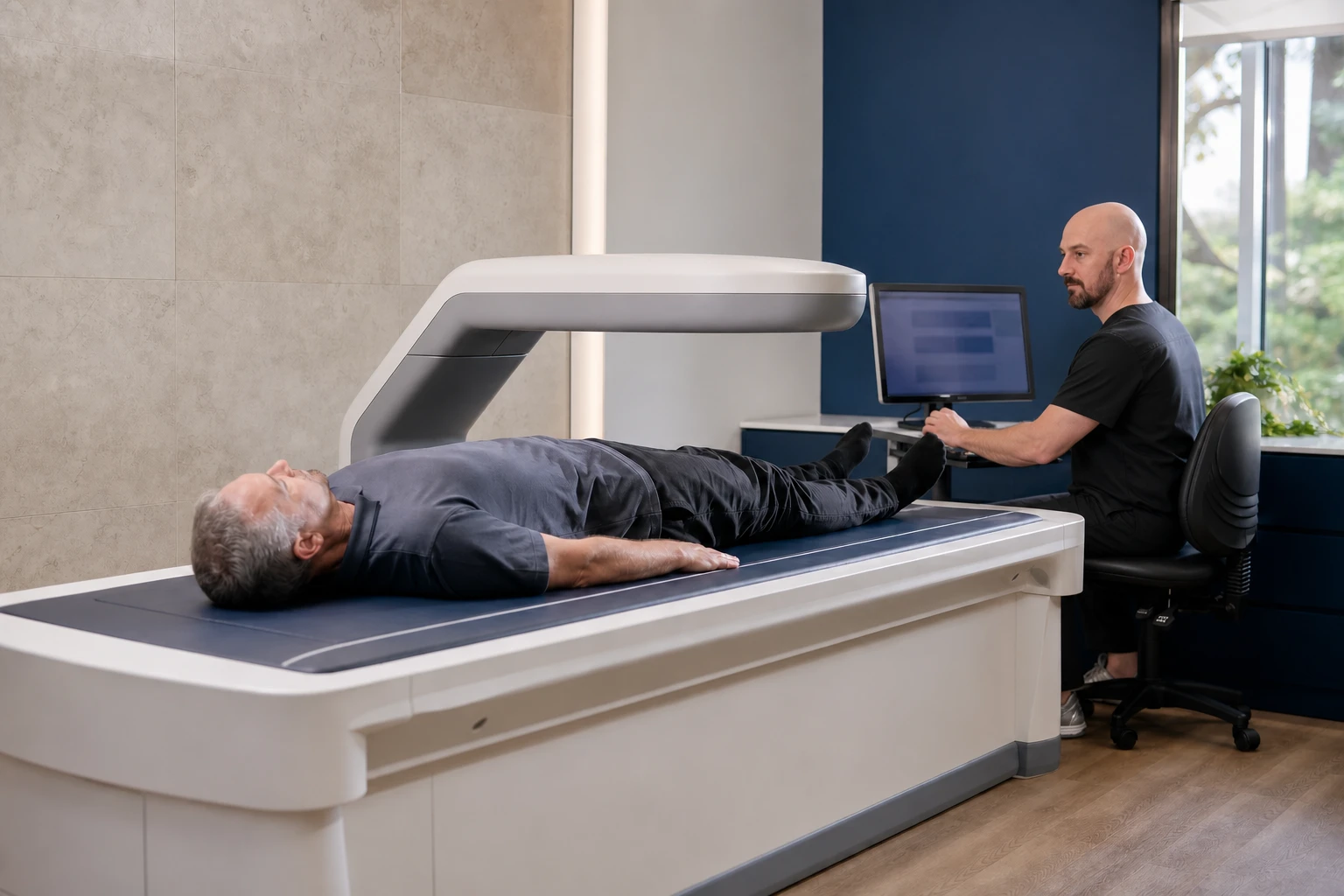
A useful distinction is muscle mass versus muscle strength. Muscle mass is the amount of muscle tissue someone has. It can be estimated using tools such as DEXA body composition scanning. Strength is what that tissue can actually do.
Both matter, but strength is often the more clinically meaningful measure. In sarcopenia research, low muscle strength is now treated as a key feature, with low muscle quantity or quality helping confirm the diagnosis.
That makes sense clinically. In the real world, patients do not lose independence because their DEXA number is low in isolation. They lose independence when they cannot get out of a chair, climb stairs, carry groceries, recover from a stumble, or safely get off the floor. Function is the point.
Falls, fractures and loss of independence
Falls are often discussed as though they are random events. Sometimes they are. But often they are the endpoint of a long decline in physical reserve. Lower limb weakness, reduced power, poor balance, pain avoidance, slower reaction time, reduced bone density, sedating medications, visual impairment and deconditioning all contribute.
From an MSK perspective, this is where muscle becomes very practical. A person needs strength to stabilise. They need power to recover from a trip. They need adequate lean mass and bone density to reduce the consequences of a fall. They need confidence in their body to keep moving.
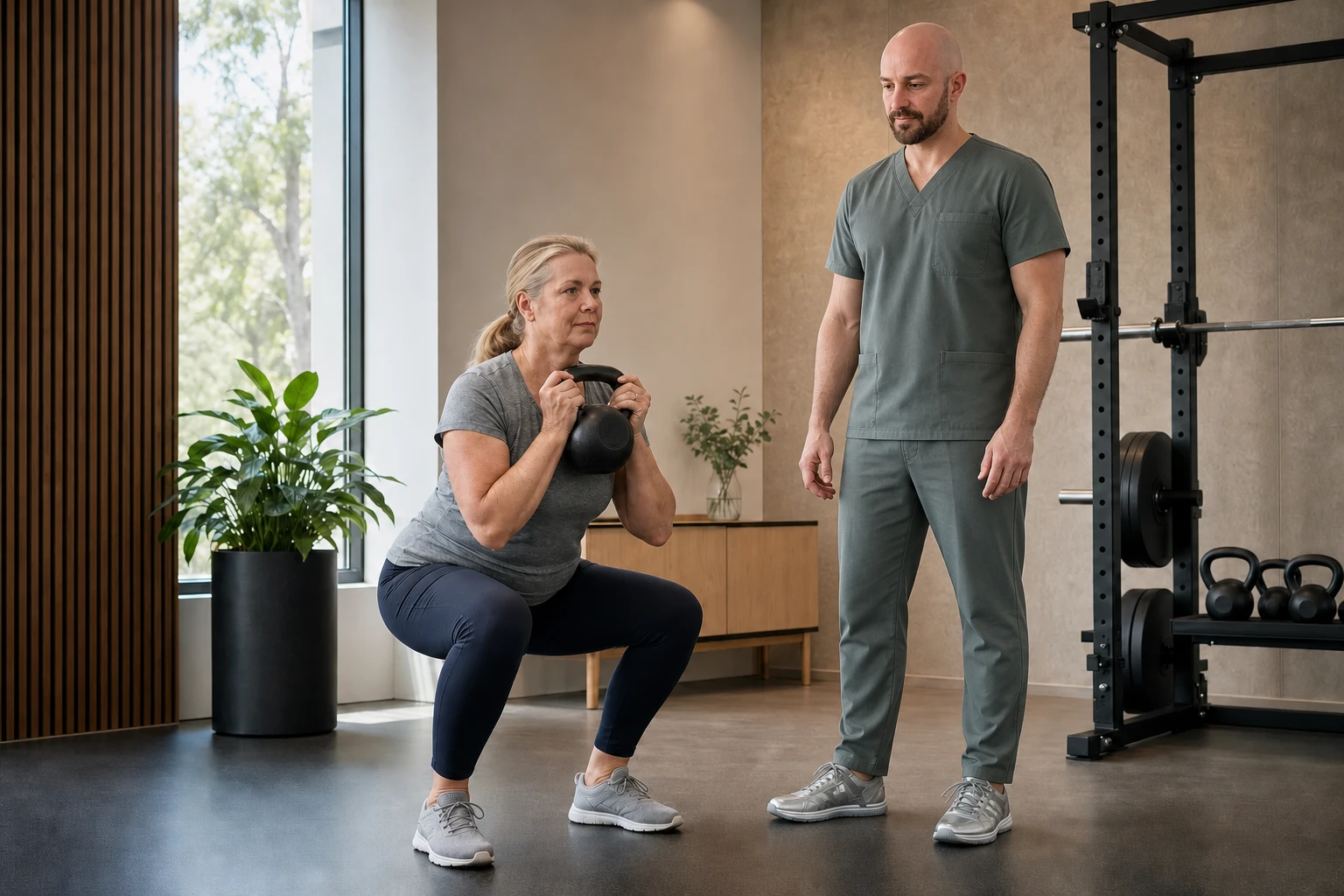
Walking is excellent and should be encouraged, but walking alone is often not enough to preserve strength, power and lean mass over decades. For that, most people need some form of progressive resistance training. That does not have to mean heavy barbell training. It might be machines, dumbbells, supervised exercise physiology, bodyweight exercises, Pilates-style strengthening, or a graded home program. The method matters less than the principle: muscle needs to be loaded progressively and safely.
Why DEXA can be useful
DEXA is commonly thought of as a bone density test, but body composition data can also be useful. A DEXA scan can help estimate:
- total body fat percentage
- visceral adipose tissue
- lean mass
- appendicular lean mass
- bone mineral density
Appendicular lean mass index, or ALMI, looks at lean mass in the arms and legs adjusted for height. It gives a more objective view of whether someone is relatively under-muscled for their age and sex.
This is useful because BMI is a blunt tool. Two people can have the same BMI but very different body composition. One may have higher visceral fat and lower lean mass. Another may have higher lean mass and lower visceral fat. Those two people may have very different metabolic and functional risk, despite a similar number on the scales. In longevity medicine, this is why body composition is often more useful than weight alone.
Protein helps, but training is the signal
Protein is important, particularly in midlife and later life. For many adults who are trying to build or preserve muscle, especially if they are doing resistance training, a practical protein target is often around 1.6–2.0 g/kg/day. This needs to be individualised, particularly in people with kidney disease, frailty, poor appetite, gastrointestinal issues, or complex medical conditions.
But protein by itself is not enough. Muscle needs both substrate and stimulus. Protein provides the amino acids. Resistance training provides the signal.
This is particularly important when people are trying to lose weight. Weight loss without a plan to preserve muscle can lead to loss of lean mass as well as fat mass. That can be counterproductive. The better goal is not simply to become lighter. The goal is to improve body composition, preserve or build strength, reduce visceral fat where needed, and improve metabolic health.
Frailty is usually built over years
Frailty does not suddenly appear. It is often the result of years of reduced loading, pain avoidance, inactivity, inadequate protein, poor sleep, illness, weight cycling, and progressive loss of strength. By the time someone is struggling to rise from a chair or has had a fall, the process has often been present for a long time.
That is also the opportunity. We should not wait until someone is frail before we start taking muscle seriously. From a preventive medicine perspective, muscle should be assessed and protected much earlier.
A practical approach
For most adults, the core principles are straightforward: measure it, train it, preserve it.
Measure it with the right tools where appropriate: DEXA body composition, ALMI, waist circumference, grip strength, sit-to-stand capacity, balance, gait speed, blood pressure, glucose markers and lipids.
Train it with regular resistance exercise that is safe, progressive and realistic.
Preserve it with adequate protein, adequate total nutrition, good sleep, pain management, consistency, and avoiding unnecessary crash dieting.
This is not about turning every patient into an athlete. It is about helping people remain capable. Capable of lifting. Capable of recovering. Capable of managing glucose. Capable of staying independent. Capable of ageing with a larger physical reserve.
Muscle is not just a cosmetic issue. It is metabolic and functional insurance. Measure it. Train it. Preserve it.
Evidence note: This post summarises evidence from sarcopenia consensus statements, DEXA body composition research, resistance training and protein studies, and observational data linking muscle strength and muscle mass with function, falls risk and mortality. It is general information, not individual medical advice.