"Lose weight" is common advice in medicine. Sometimes weight reduction is clinically appropriate. In the right patient, reducing excess body fat can improve blood pressure, glucose control, fatty liver disease, sleep apnoea, osteoarthritis symptoms and cardiovascular risk.
But "lose weight" on its own is not a proper medical plan. It does not say what kind of weight should be lost. It does not say how muscle will be protected. It does not explain how metabolic health will be assessed. It does not consider strength, pain, mobility or long-term function. It gives the patient a target, but not a clinical strategy.
A more useful approach is to look at body composition, metabolic markers and physical function together.
Weight is only one measurement
Body weight is easy to measure, which is why it is used so often. It can be useful for tracking change over time, but it does not describe what the body is made of.
A person can lose several kilograms and still have high visceral fat, low muscle mass and poor glucose control. Another person may lose very little weight but reduce waist circumference, improve triglycerides, lower blood pressure, gain strength and improve body composition. The scale cannot distinguish between those two situations.
That is the limitation. Weight tells us mass. It does not tell us tissue type, fat distribution, metabolic risk or function.
BMI is useful, but limited
BMI is a simple calculation based on height and weight. It is useful in population health because it broadly correlates with risk across large groups of people. It is quick, cheap and easy to apply.
For an individual patient, it can miss important information. BMI does not distinguish between fat mass and lean mass. It does not show whether fat is stored mainly under the skin or around the abdominal organs. It does not assess muscle strength, cardiorespiratory fitness, pain, mobility, bone density or insulin resistance.
A patient with a normal BMI can still have low muscle mass and increased abdominal fat. A patient with a higher BMI may have more lean mass and better function than the number suggests. BMI is a starting point. It should not be the whole assessment.
Fat distribution changes clinical risk
Fat stored around the abdomen is more clinically concerning than fat stored in some other areas. Visceral adipose tissue sits deeper in the abdomen, around the internal organs. Higher levels are associated with insulin resistance, fatty liver disease, abnormal lipids, inflammation, high blood pressure, type 2 diabetes and cardiovascular disease.
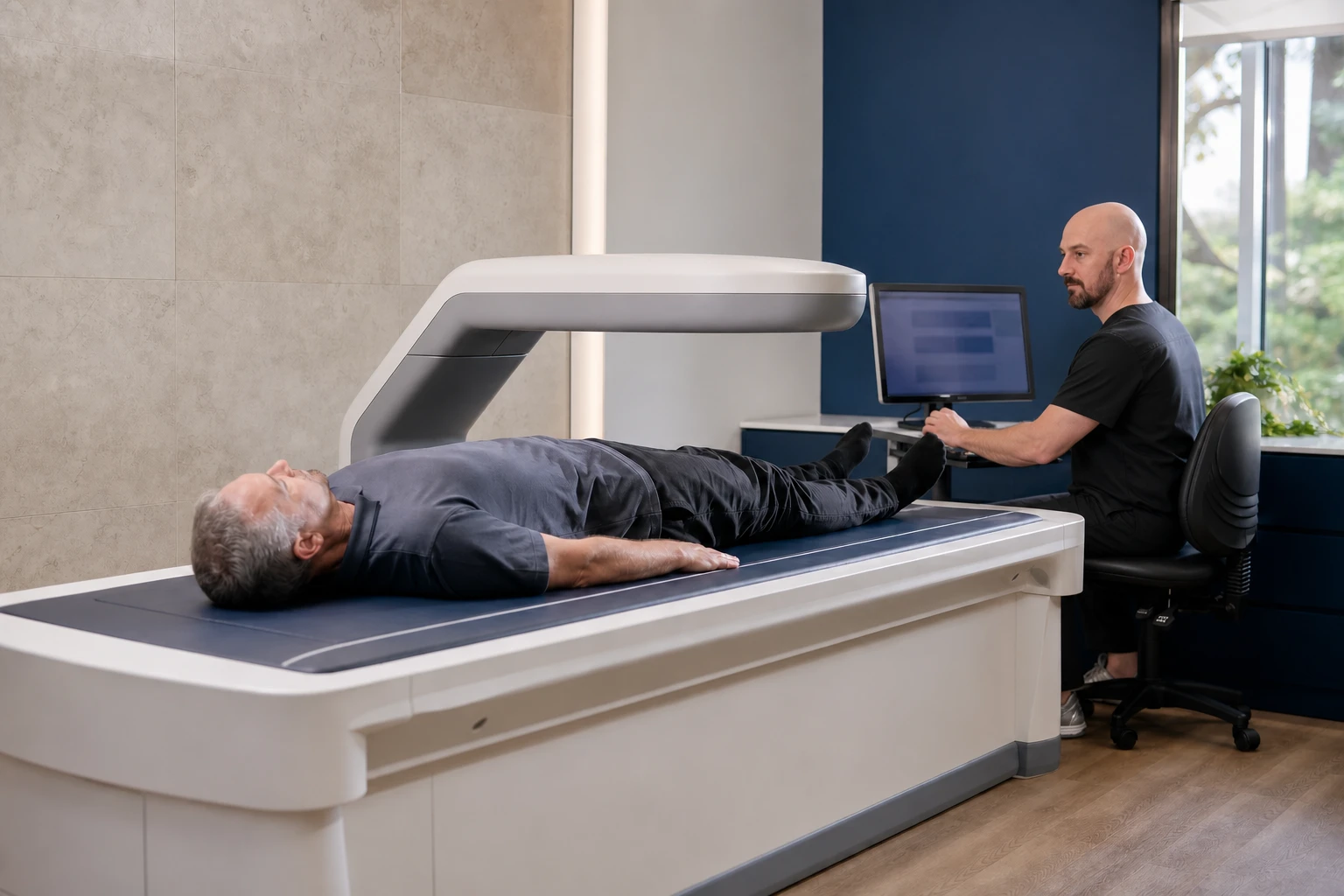
This is why waist circumference can be helpful. It gives a rough indication of abdominal fat distribution. Body composition imaging, such as DEXA, can provide more detail. DEXA can estimate total fat mass, body fat percentage, visceral adipose tissue, lean mass and bone density.
This changes the clinical conversation. The aim is not simply to reduce the number on the scales. The aim is to reduce excess fat where it is contributing to metabolic risk, while preserving the tissue that supports strength, movement and function.
Muscle should be assessed during weight loss
Skeletal muscle is involved in glucose handling, joint support, mobility, balance and physical independence. When a person loses weight, some of that weight may come from fat, some from fluid and some from lean tissue. Loss of lean mass is particularly relevant in midlife and older age, when muscle is already harder to maintain.
A weight-loss plan should therefore include an assessment of muscle and strength. Useful clinical questions include:
- Is the patient maintaining or gaining strength?
- Is protein intake adequate?
- Is resistance training included?
- Is the patient becoming more physically capable?
- Is pain preventing appropriate exercise?
- Has weight loss affected energy, mobility or balance?
- Is body composition improving, or is only weight changing?
These are clinical questions, not fitness questions. They help determine whether the intervention is improving health or just reducing body mass.
DEXA can provide useful body composition information
DEXA is commonly used to assess bone density. Many DEXA reports can also provide body composition data, including:
- total fat mass
- body fat percentage
- visceral adipose tissue
- lean mass
- appendicular lean mass
- appendicular lean mass index, or ALMI
- fat-free mass index, or FFMI
- bone mineral density
ALMI refers to lean mass in the arms and legs adjusted for height. This is clinically useful because limb lean mass relates to strength, mobility and function.
DEXA is not necessary for every patient. It also needs to be interpreted in context. But where body composition is a central issue, DEXA can provide information that weight and BMI cannot. It may identify someone who is under-muscled despite not appearing thin. It may show high visceral fat in someone whose weight does not look especially concerning. It may also show whether a fat-loss plan is preserving lean mass over time.
Metabolic markers should guide the plan
Body composition should be considered alongside metabolic markers. Useful markers may include:
- waist circumference
- blood pressure
- fasting glucose
- HbA1c
- triglycerides
- HDL cholesterol
- liver enzymes
- ApoB or other cardiovascular markers when clinically appropriate
A pattern of increasing waist circumference, rising fasting glucose, elevated triglycerides, low HDL cholesterol and higher blood pressure suggests metabolic dysfunction. In that situation, weight reduction may be part of the plan, but the clinical targets are broader: to improve glucose handling, reduce visceral fat, improve blood pressure, improve lipid markers, address fatty liver risk and reduce long-term cardiovascular and metabolic risk. Weight may move in the right direction as part of that process, but it is not the only outcome.
Nutrition should protect lean mass
When energy intake is reduced, the body can lose both fat and lean tissue. Protein intake becomes important during weight reduction, particularly if the person is also doing resistance training. For many adults trying to lose fat while preserving muscle, a practical protein target is often around 1.6–2.0 g/kg/day.
This needs to be individualised. Patients with kidney disease, frailty, poor appetite, gastrointestinal symptoms, eating disorder history or complex medical conditions need a more cautious and tailored approach. Protein does not replace resistance training, and resistance training does not replace nutrition. Both are usually required if the aim is fat loss with preservation of muscle.
Resistance training should be included
Walking and aerobic exercise are excellent for health. They support cardiovascular fitness, insulin sensitivity, mood and general function. But muscle preservation usually requires some form of progressive resistance training. This might involve:
- weights
- machines
- resistance bands
- bodyweight exercises
- Pilates-style strengthening
- exercise physiology
- a structured home program
The format can vary. The key is that muscle is loaded progressively and safely. For patients with osteoarthritis, tendon pain, back pain, previous surgery or low confidence with movement, the exercise plan needs modification. Avoiding resistance training altogether often makes the long-term problem worse.
In an MSK setting, this is a common issue. Pain changes how people move. Reduced movement leads to deconditioning. Deconditioning reduces strength and confidence. The weight-loss plan then fails because the patient cannot train consistently. Pain and injury need to be assessed as part of the plan, not treated as separate issues.
GLP-1 medications need a broader clinical plan
GLP-1 receptor agonists and related medications can be very useful for selected patients. They can reduce appetite, support weight loss, improve glycaemic control and reduce cardiometabolic risk in certain groups. They still need to be used within a proper clinical plan.
A patient on a GLP-1 medication still needs attention to nutrition, protein intake, resistance training, side effects, hydration, constipation, reflux, gallbladder symptoms, glucose markers, blood pressure, lipid markers and maintenance after weight loss. Some lean mass loss can occur during weight reduction. This does not mean these medications should be avoided when clinically appropriate, but it does mean the plan should actively protect muscle and function.
"Start the medication and lose weight" is too narrow. The medication may reduce appetite. The clinical plan still needs to protect nutrition, muscle and long-term function.
Older adults require particular care
In older adults, weight reduction needs more caution. Excess visceral fat and metabolic disease still need treatment, but aggressive weight loss can worsen sarcopenia if muscle is not protected. For some patients, the first priority may be:
- improving protein intake
- starting resistance training
- improving balance and mobility
- treating pain that limits movement
- reducing alcohol intake
- improving sleep
- improving glucose and blood pressure control
Weight may still need to come down, but the order of treatment matters. A patient who becomes lighter but weaker has not necessarily had a good medical outcome.
A better plan than "lose weight"
A more useful medical plan is specific. It might include:
- reducing waist circumference
- reducing visceral fat
- preserving or increasing lean mass
- improving blood pressure
- improving fasting glucose and HbA1c
- improving triglycerides and HDL cholesterol
- addressing fatty liver risk
- improving strength
- improving aerobic capacity
- reducing pain barriers to exercise
- improving function in daily life
This gives the patient a clearer clinical direction. It also gives the clinician better markers to follow. The scale can still be used, but it should sit alongside other measures.
Body composition gives better clinical information than weight alone
Weight tells us whether total body mass has changed. It does not tell us whether the change is metabolically useful, functionally useful or sustainable. For that, we need to look at the composition of the weight and the patient's overall risk profile: visceral fat, lean mass, blood pressure, glucose, lipids, liver health, strength, pain, mobility and fitness. That is a more complete assessment.
"Lose weight" may be part of the discussion, but it should not be the whole plan. A better clinical aim is to improve body composition, metabolic health and function.
Evidence note: This article summarises evidence from body composition assessment, metabolic health research, resistance training and protein studies, and clinical obesity medicine. It is general information, not individual medical advice.